
"is the most traditional"
10000 article(s) found

The Panamanian coffee tradition and the boutique coffee producing areas that are familiar to the public are mostly from Bogut.
Professional coffee knowledge exchange more coffee bean information please follow the coffee workshop (Wechat official account cafe_style) Panama Hartman Manor Panama Hartmann Estate mentioned the Panamanian coffee tradition, the public are more familiar with the boutique coffee producing areas are mostly from Boquete, but in recent years, Volcan coffee growing in the boutique market

The difference between traditional black tea and new craft black tea is which traditional Dianhong or sunburn tastes better.
What is the comparison of tea evaluation? Comparison and evaluation is to soak two or more kinds of tea together to determine the unique characteristics of each kind of tea. This practice helps to compare different brands, harvests and grades of tea. Comparison and evaluation can also help you develop your sense of taste, allowing you to better enjoy subtle nuances.

Coffee growing in Sumatra traditional Chinese medicine taste Mantenin coffee traditional wet planing method
The top Mantenin is suitable from city to italian. The taste of light baking is very clean, sour and sweet; deep baking has a very deep flavor and strong taste. For a general grade, it is recommended to bake to full city or a little deeper. Coffee cultivation in Sumatra began in the 18th century, when the planting area was near Aceh in Lake Tawar to the north.

Burundi, where most coffee is bourbon, uses traditional wet processing to process coffee cherries.
Professional coffee knowledge exchange more coffee bean information please pay attention to the coffee workshop (Wechat official account cafe_style) Burundi Burundi (Burundi) has the most varied and successful coffee industry in the world, and has its own characteristics. Coffee in this country was introduced by Belgian colonists in 1930 and is now grown only on small farms. Unfortunately, many of these farms are at war.

Do you know the difference between fine coffee and traditional coffee? What is the difference in flavor between them?
The common traditional coffee is a mixture of Arabica and Robusta coffee beans, with many defective beans. So most of the coffee tastes bitter and needs to be balanced with sugar. Traditional coffee beans are usually baked by some large companies, mixing Arabica and Robusta coffee beans, resulting in very fine powder and dark baking color. And it comes from 100%.

The most traditional Arabica coffee variety-Arabica Arabica coffee
Arabica bean scientific name: coffea arabica (Arabica bean) family: Rubiaceae coffee tree can be divided into two main varieties: Arabica species (coffea arabica) and Robusta species (coffea robusta/coffea canephora) (rare on the market). Arabica (Coffea arabica) is the most traditional Arabica coffee variety. Originated in the east

Introduction of the Origin of the most traditional Arabica Coffee
Arabica (Coffea arabica) is the most traditional Arabica coffee variety. Originally from East Africa, coffee was monopolized by the Arab world for a long time before the 15th century, so it was called Arabian coffee by Europeans. It turned out that all the commercial coffee in the world were small grains, but it was only at the end of the 19th century that growers began to look for other resistance to a large-scale disease.
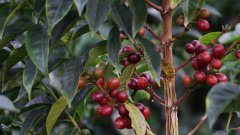
Cultivation conditions in Nicaragua SHG grade the most classic flavor of traditional coffee varieties
The global trend of modern coffee has gone through three popular stages: the first stage is the popularity of cheap coffee represented by instant coffee from the post-World War II to the 1960s; the second stage is the popularity of commercial coffee represented by Starbucks from the 1960s to the beginning of this century; the third stage is the popularity of boutique coffee, which originated in the 1970s and has become a trend in the past decade.
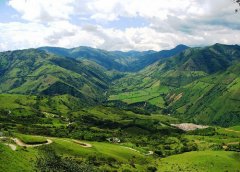
Attland American Coffee Manor
Traditional Traditional Atitl n (Traditional Atitl n) is one of the five largest volcanic coffee producing areas in Guatemala, and its soil organic matter is the most abundant among the five major volcanic coffee producing areas. 90% of the traditional Atilan coffee is grown on the violent volcanic slopes of Lake Attila, where the daily breeze stirs the lake and is a slight breath to the region.

Black Coffee there are three traditional ways to make coffee
There are three ways to make black coffee, so there are three different types of coffee pots: traditional follicle type, siphon type and electric type. The traditional follicular coffee pot is the most primitive and the simplest way to do it. The coffee pot is composed of a funnel, a piece of filter paper and a container below, but it requires a lot of manual craftsmanship. If properly handled, you can make delicious coffee with a mellow taste. This

The third producing area of Guatemala-different coffee networks at high and low elevations of traditional Attland coffee
Of the five volcanic coffee producing areas in Guatemala, Atitlan's soil is the most rich in organic matter. Guatemala has many volcanic lakes, of which Lake Attila is the largest and most famous; the mountains of majestic volcanoes extend into the shores of Lake Attila, and 90% of Atitlan coffee is grown on these majestic volcanic slopes.
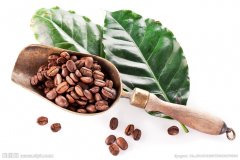
The third producing area of Guatemala-different coffee networks at high and low elevations of traditional Attland coffee
Of the five volcanic coffee producing areas in Guatemala, Atitlan's soil is the most rich in organic matter. Guatemala has many volcanic lakes, of which Lake Attila is the largest and most famous; the mountains of majestic volcanoes extend into the shores of Lake Attila, and 90% of Atitlan coffee is grown on these majestic volcanic slopes.

Three major coffee bean treatment methods Coffee bean sun treatment is the most traditional and simple treatment.
Professional coffee knowledge exchange more coffee bean information please pay attention to the coffee workshop (Wechat official account cafe_style) front street-coffee treatment is the simplest and cheapest traditional method in coffee bean processing, the harvested fruit should be spread on the cement floor, brick floor or straw mat, put in the sun, and often rake evenly to prevent hair

Fragrant but not sour coffee flavor in Bali, Indonesia, an introduction to the characteristics of the manor.
Batik handicrafts Bali wood carving is very famous, is the crystallization of the wisdom of the local people, but also an indispensable souvenir of tourism. Bali wood carvings are mahogany, rosewood and so on, the price varies. The workmanship is very exquisite and the shapes are different. According to your own preferences, you can choose Bali's most famous modern and traditional batiks and colored fabrics, wood carvings and

Why do Sumatran coffee beans use wet planing? traditional semi-washing brings classic Mantenin flavor.
For the exchange of professional baristas, please follow the coffee workshop (official Wechat account cafe_style). The editor has previously introduced the Sumatran semi-washing method, that is, wet peeling, because of the treatment process, it often produces many different flavors, such as wood, soil, mildew, spice, etc., which may not be very pleasant to most people, but

Nicaragua grows Segovia, a traditional coffee variety.
Nicaragua (Nicaragua) aroma 3.5 minutes brightness 4 mellow flavor 4 points aftertaste 4 points suitable for baking: people who like deep-baked taste of City/Full city can try Jinotega and Matagalpa, baking the second burst when the beans are dense, the flavor is thick but well balanced, with a strong bitter sweetness
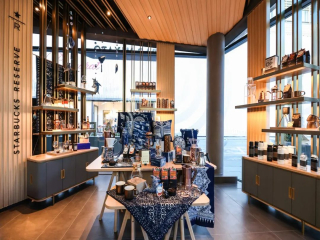
Starbucks 'first intangible cultural heritage experience store in the world is about to open! Popularize and spread the traditional culture of Chinese batik
You know what? Batik is an ancient dyeing technique. Chinese batik production technology has a long history, dating back to the 6th century AD. It is a folk traditional textile printing and dyeing handicraft art. Due to the elegant color, unique style and unique charm of batik patterns, it is mostly used in traditional clothing and various practical life.

Traditional Chinese medicine says you can't drink coffee? Coffee is suitable for whom to drink? How would you like your coffee?
Professional coffee knowledge exchange more coffee bean information Please follow the coffee workshop (Wechat official account cafe_style) friends who have seen traditional Chinese medicine should have a high chance to hear the following similar taboos against coffee: "Coffee can cause hot and humid constitution, you should drink less", "your acne is related to the dryness and heat of your body, touch less irritating food, spicy fried, coffee is not suitable.

Burundi Kirimiro traditional double fermented coffee bean flavor taste introduction
Weixin Official Accounts qianjieccoffee) Burundi is located in the center of Africa. It is a small landlocked country. It is a country dominated by hills and mountains. Since 1930, coffee has been planted and produced. Most varieties are bourbon. Coffee grows on mountains at an altitude of 1,250- 2,000 meters. Most of them are bourbon.